
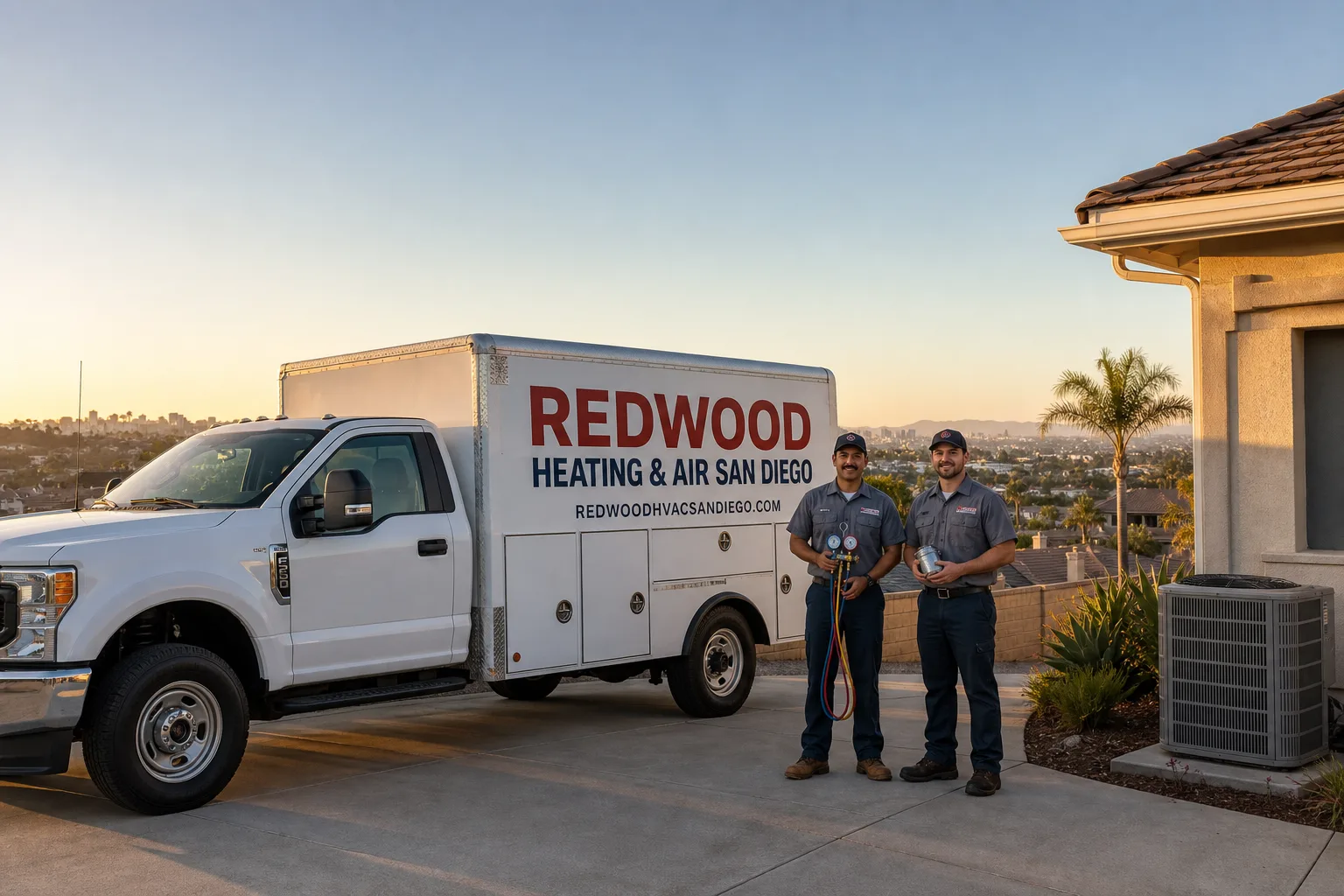
Fast, Reliable Air Quality & Ventilation Across Crestline
Air quality and ventilation work in Crestline isn’t like the flatland jobs down in San Bernardino. At 4,700 feet on the Rim of the World, your cabin’s propane furnace, pine-needle-clogged condenser, and zero-original-ductwork layout create a specific set of problems that valley contractors simply don’t encounter. We make the drive up Highway 18 to Crestline regularly — typically same-day or next-morning response for air quality emergencies — and we know the difference between a 1950s vacation cabin on Lake Drive and a 1970s conversion on Waters Drive. If your indoor air feels stale, your propane heater’s drying you out, or you’re worried about ventilation in a house never built for it, call us at (844) 875-9451. We’ll walk your property, check your existing setup, and give you a free estimate with real numbers.
Why Redwood Heating & Air San Diego Is Crestline’s Preferred Air Quality & Ventilation Company
Gregory Hahn founded this company and still leads every technical decision. That matters in Crestline, where a standard San Bernardino Valley approach to ventilation will fail. Our Air Quality & Ventilation team has spent 13 years diagnosing systems across nine major brands — Carrier, Trane, Lennox, Daikin, Bryant, American Standard, and others — so we don’t guess at what your cabin needs. We’ve earned 428 verified customer reviews averaging 4.6 stars, and Crestline homeowners specifically mention our willingness to crawl into those tight 1940s–1970s crawl spaces and design real solutions where none existed before.
Response time to Crestline runs same-day for urgent calls, next-morning for standard scheduling. We know Highway 18 closures can delay other contractors; we plan for it. More importantly, we understand altitude derating. A flatland contractor will size your propane furnace for sea-level BTU output and install equipment that short-cycles constantly, never runs long enough to move air properly, and leaves you with stuffy rooms and condensation problems. We’ve fixed that exact mistake in Crestline cabins more than once.
Our Air Quality & Ventilation Services in Crestline
ERV/HRV System Installation
This is the service we most often recommend for Crestline’s converted vacation cabins. These buildings were never designed with fresh-air intakes. A wall furnace blasts dry, recirculated air; propane combustion consumes oxygen without replacing it. We recently retrofitted an HRV system in a 1960s cabin on Lake Drive to combat stale, moisture-laden air from propane heating. The original wall furnace had no fresh-air intake, so we installed a Daikin ERV, ducted through the shallow crawl space, ensuring proper ventilation without excessive heat loss. An ERV transfers heat and moisture between outgoing stale air and incoming fresh air — critical when outdoor winter temperatures drop to the teens and you can’t afford to lose every BTU your propane furnace generates. Typical ERV/HRV installation in Crestline runs $2,800–$5,400, depending on whether we can access your crawl space and how many rooms need dedicated vents.

Air Filtration
Crestline’s dense ponderosa pine canopy creates a specific filtration problem. Pollen, pine dust, and wildfire smoke from the San Bernardino National Forest all press against your cabin’s minimal weatherstripping. Most Crestline homes still have the original single-pane windows with gaps that standard suburban filtration advice doesn’t address. We install whole-house media filters and sealed bypass systems sized to your actual air handler — not the nominal rating on the box. For cabins with no central ductwork, we design standalone filtration tied to mini-split heads or dedicated recirculation units. A typical whole-house air filtration upgrade in Crestline costs $650–$1,850.

Ventilation Install
Retrofitting ventilation into a 1940s–1970s Crestline cabin means working with shallow crawl spaces, no existing ductwork, and structural constraints that didn’t anticipate mechanical systems. We’ve run flexible duct through floor joist bays in Lake Drive cabins, installed inline exhaust systems for bathrooms that previously vented into attics, and designed make-up air strategies for tight kitchen remodels. Every installation accounts for your propane appliance load — combustion air requirements are non-negotiable at this elevation where houses seal tighter than their original designers intended. Ventilation installation ranges from $1,200 for localized bath/kitchen exhaust to $4,500+ for whole-house fresh-air systems.

Humidifier & Dehumidifier Installation
Crestline’s four-season alpine climate creates both problems. Winter propane heating drops indoor relative humidity into the teens — we see cracked woodwork, nosebleeds, and static damage to electronics in cabins above 4,500 feet. Summer afternoons in the mid-80s with closed-up houses can push humidity high enough for mold in those unventilated crawl spaces. We install steam humidifiers tied to propane furnaces and whole-house dehumidifiers for summer months. A typical humidifier install runs $480–$1,200; dehumidifier systems range $1,100–$2,600 depending on capacity and whether we need dedicated drainage.

UV Air Purifier
For Crestline cabins with persistent microbial issues — musty crawl spaces, old water damage, or extended vacancy periods — UV-C lamps mounted at the coil or in ductless mini-split heads prevent biofilm buildup. Particularly relevant for homes that sit unoccupied between weekend visits, allowing stagnant air to cultivate problems. UV purifier installation typically $380–$920.

What happens when you call
- 1
A real person answersNo phone trees — you reach a local pro.
- 2
You get an upfront price rangeHonest numbers before anyone is dispatched.
- 3
A background-checked tech heads outLicensed & insured, dispatched right away.
- 4
You approve before work beginsNothing starts until you say go.
Trusted Brands We Service in Crestline
We service your brand. Gregory Hahn holds factory training or equivalent field certification across Carrier, Trane, Lennox, Daikin, Bryant, American Standard, Rheem, York, and Goodman — and we stock common parts for Crestline’s most frequent needs: Daikin ERV components, Bryant humidifier pads, American Standard filtration media. No waiting two weeks for a valley warehouse to make a delivery up Highway 18. Most filter replacements, UV lamp swaps, and humidifier pad changes we complete in a single visit. For the specialized propane orifice sizing and altitude-derated equipment Crestline requires, we source through suppliers who understand mountain HVAC, not generic flatland distributors.
Common Air Quality & Ventilation Problems We See in Crestline Homes
- Altitude derating miscalculation leads to oversized propane furnaces. A furnace rated for 80,000 BTU at sea level delivers roughly 64,000–66,000 BTU at Crestline’s 4,700 feet. Contractors who don’t derate install equipment that blasts heat in three-minute cycles, never runs long enough to circulate air through your rooms, and creates pressure imbalances that draw crawl space air into living spaces. We measure actual output and size accordingly.
- Pine needle debris clogs outdoor condenser units. Your heat pump or AC condenser sits under ponderosa pines that shed year-round. Reduced airflow causes the unit to work harder, and in winter operation it can contribute to heat exchanger stress. We clear coils and recommend elevated mounting or needle guards where the canopy is thickest.
- Propane supply interruptions force unvented space heater use. When Highway 138 or Highway 18 closes during snow events, propane deliveries stop. Homeowners drag out kerosene heaters or unvented blue-flame units, spiking indoor CO and moisture levels. We design ERV systems and proper combustion air supplies so you’re not making that choice.
- Zero original ventilation in converted vacation cabins. A 1950s cabin built for weekend occupancy had no reason to manage indoor air quality for continuous living. Full-time residents now cook, shower, and breathe in spaces that never had bath fans, range hoods, or fresh-air intakes. We retrofit these systems without destroying the cabin’s character.
Pricing for Air Quality & Ventilation in Crestline, CA
Here’s what typical air quality and ventilation work costs in Crestline’s market:
| Service | Typical Range in Crestline |
|---|---|
| ERV/HRV System Installation | $2,800 – $5,400 |
| Whole-House Air Filtration Upgrade | $650 – $1,850 |
| Ventilation Install (localized) | $1,200 – $2,800 |
| Ventilation Install (whole-house) | $3,200 – $4,500+ |
| Humidifier Installation | $480 – $1,200 |
| Dehumidifier System | $1,100 – $2,600 |
| UV Air Purifier | $380 – $920 |
Three factors push Crestline jobs toward the higher end: altitude-derated equipment costs more than standard equivalents; shallow crawl spaces and no existing ductwork add labor hours; and propane-specific components (LP orifices, proper manifold pressure regulators) require specialized ordering. We give exact quotes after seeing your specific cabin — estimates are free, and we don’t charge for the drive up the mountain. Call (844) 875-9451 to schedule.
We Also Serve Cities Near Crestline
We regularly make the mountain run to Lake Arrowhead for similar altitude-derated ventilation work, handle commercial and residential calls in San Bernardino and Highland down in the valley, and service the rural properties around Muscoy where propane and older housing stock create comparable challenges. Each community gets the same Gregory Hahn-led technical approach, adjusted for local conditions.
Serving Crestline, CA — Our Local Coverage Area
We’re based in the Crestline area and know this community well. Use the map below to see our service coverage — if you’re nearby, we can almost certainly help.
FAQs — Air Quality & Ventilation in Crestline
Altitude derating reduces your furnace’s BTU output by approximately 18–20% at Crestline’s 4,700-foot elevation, and a contractor who ignores this installs oversized equipment that short-cycles constantly. Short cycling means your furnace never runs long enough to move air through your rooms or activate proper ventilation, leaving you with stale, unevenly heated spaces and potential condensation problems. We calculate derated output before specifying any equipment. Call (844) 875-9451 if you’re not sure your current furnace was properly sized — we can check.
Yes, an ERV transfers moisture from your outgoing stale air to incoming fresh air, which directly counteracts the extreme drying effect of propane combustion heat in Crestline’s winter. Unlike a simple exhaust fan that dumps your heated, humidified air outside, an ERV recovers both heat and moisture, maintaining healthier humidity levels without wasting the BTU’s your propane tank delivered up the mountain. Most Crestline cabins we retrofit see indoor relative humidity stabilize 15–25% higher after ERV installation. Call for a free assessment of your cabin’s layout.
In Crestline’s heavy ponderosa pine canopy, check your filter monthly during pollen season (May–July) and replace it at least every 6–8 weeks even with standard 1-inch pleated filters. Pine pollen is fine and resinous; it loads filters faster than typical urban dust. If you’re running heating continuously in winter, that schedule holds — recirculated air keeps moving debris. We stock American Standard and Bryant filtration media sized for the restricted airflow common in Crestline’s older cabin systems. Call (844) 875-9451 and we’ll set you up with the right schedule for your specific tree cover.
Snow outside doesn’t prevent moisture problems inside; in fact, Crestline’s tight, converted cabins often trap humidity from cooking, showering, and occupant respiration with no way to exhaust it. Summer afternoons in the mid-80s with windows closed can push indoor humidity above 60%, and winter snowmelt against foundation walls wicks into crawl spaces. We install dehumidifiers tied to dedicated drainage or condensate pumps where gravity drainage isn’t possible. A quick moisture reading during our free estimate tells you whether your specific cabin needs one.
Ductless ERV systems with dedicated room-by-room wall or ceiling units, paired with localized exhaust fans in kitchens and baths, are the most practical approach for Crestline’s 1940s–1970s cabins. We run low-profile duct through floor cavities and exterior walls where possible, or use point-source fresh-air units tied to your existing mini-split zones. The key is matching ventilation rate to your cabin’s air volume and propane combustion load, not just installing a fan. We’ve solved this exact problem on Lake Drive and throughout the 92325 zip code. Call (844) 875-9451 for a retrofit plan specific to your layout.
Written by Gregory Hahn, Owner at Redwood Heating & Air, serving Crestline and the San Bernardino Mountains since 2011.